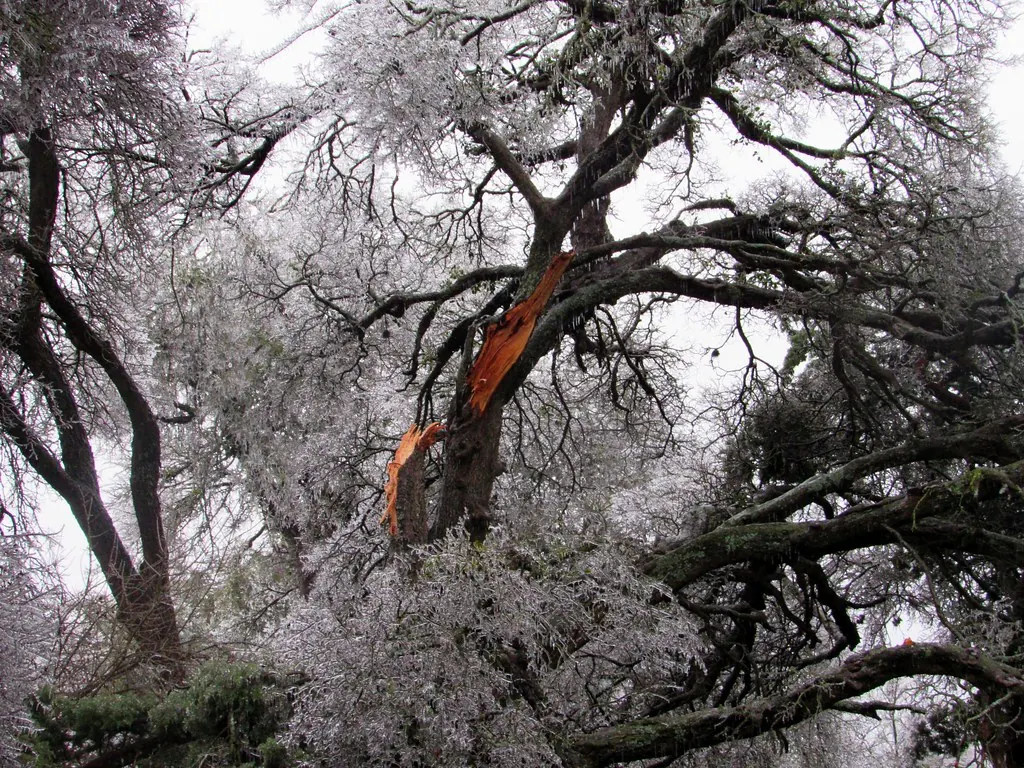
The physics
Glaze ice weighs about 57 pounds per cubic foot. The tool treats the limb as a cylinder and adds a uniform shell of ice around it: ice volume = π × length × ((r + t)² − r²), where r is the limb radius and t is the ice thickness. A twig factor accounts for side branches, which collect ice out of proportion to their size. Green hardwood is estimated at about 55 pounds per cubic foot.
Why it matters for a claim
Insurers sometimes argue that a limb failed because the tree was dead or decayed. Showing the load the ice imposed helps explain why healthy limbs failed during storms like December 2000 and January 2009. Photos of the break, showing sound wood, are strong evidence.
Limits of the estimate
Real ice accretion is uneven, wind adds dynamic load, and wood density varies by species and moisture. Treat the results as illustrative, not an engineering analysis.
Questions about this tool
Is a tree falling on my house covered if the tree was healthy?
Generally the damage to the covered structure is covered, with limited coverage for removal. Policy wording controls.
What if the tree was dead?
Carriers may argue maintenance issues, but the damage to your home may still be covered. Coverage disputes like this may need legal advice.
Should I photograph the broken limb?
Yes. Close-ups of the break showing sound or decayed wood help establish why it failed.
More free tools
 Estimator
Claim Gap & Fee Estimator
Compare estimates, test three award scenarios and see your net after appraiser and umpire fees. Calculator
RCV vs. ACV Holdback Calculator
Line-item depreciation with a labor-share toggle, showing your first check and the holdback. Calculator