The math
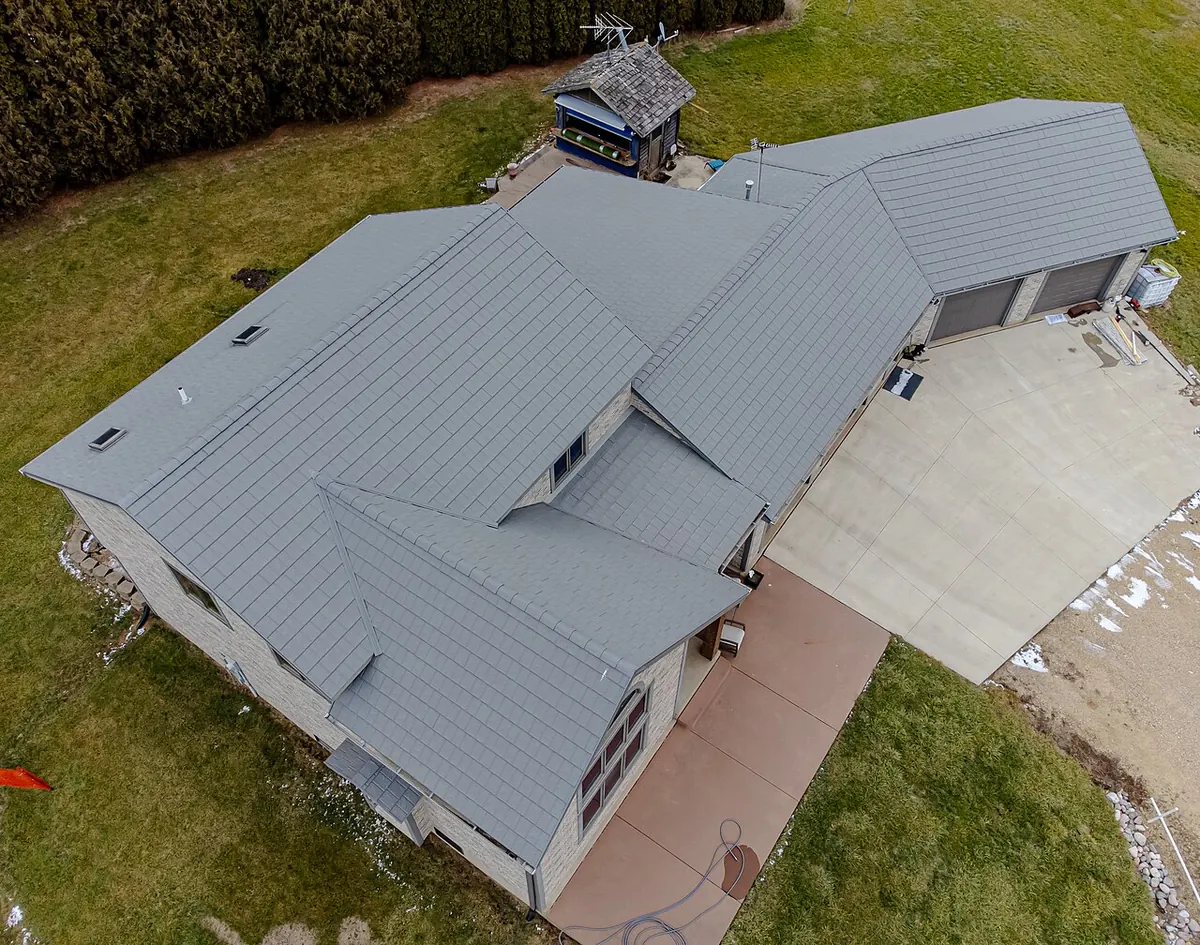
The footprint plus overhangs is multiplied by the pitch factor, √(1 + (rise ÷ 12)²), to get roof surface area. Divide by 100 for squares. Waste depends on style: about 10% for a simple gable, 15% for a hip and 20% for a cut-up roof with valleys and dormers.
Drip edge is approximated from the perimeter. Ridge length is the long dimension for a gable; for a hip, hip lengths are added using the pitch. These are rough checks; a measured report or field measurement is more precise.
What to compare
- If the estimate’s squares are much lower than this result, ask how the roof was measured.
- Check that steep charges appear when the pitch is 7/12 or steeper, and high-roof charges for two-story eaves.
- Look for starter strip, drip edge, ridge cap and flashing as separate lines.
Questions about this tool
Why is my result different from a measurement report?
Footprint math assumes one pitch and a simple shape. Reports measure each facet separately.
Does waste get paid on a claim?
Estimates normally include a waste factor on shingles because material is cut and lost during installation.
What price per square should I use?
Use a local contractor’s quote. Prices vary by shingle type, tear-off layers and access.
More free tools
 Calculator
Percentage Deductible Calculator
Turn a 1%, 2% or 5% wind/hail deductible into dollars and see what the policy actually pays. Planner
Claim Timeline Builder
Build a dated timeline of claim milestones and export it as a calendar file. Checklist